
Key facts
- A popular pesticide used for three decades in other countries to kill off unwanted farmland slugs could be devastating.1
- The findings come six years after some of the same Oregon State Scientists touted Nemaslug as a potential alternative.1
- Nemaslug is currently not approved by the U.S. Department of Agriculture or Oregon agriculture regulators because of limited research into.2
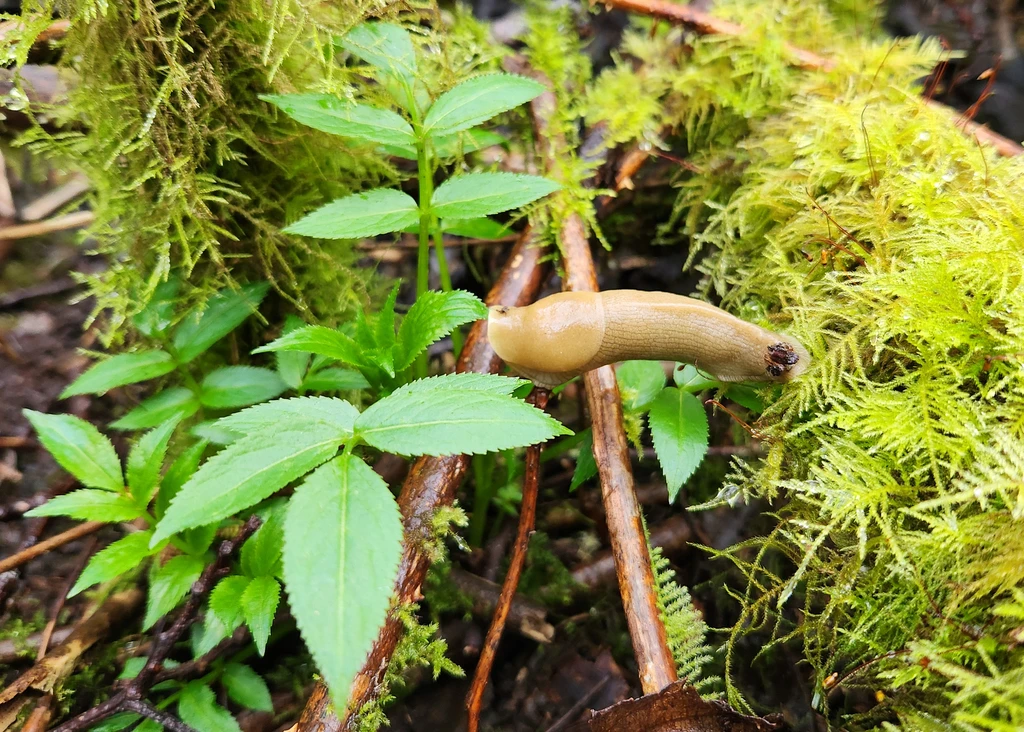
A popular pesticide used for three decades in other countries to kill off unwanted farmland slugs could be devastating to a key species of West Coast slug and the ecosystems they support if approved for sale in the U.S.1
The pesticide is Nemaslug, a commercial pesticide sold in many parts of the world.1
Scientists from Oregon State University tested two different versions of Nemaslug on banana slugs collected on the Oregon Coast.1
The banana slugs are native to coastal rainforests from central California to southeast Alaska..1 They aid forest health by decomposing organic matter and dispersing seeds.1
The scientists found that nearly every banana slug that came into contact with the Nemaslug products died..1 The findings were particularly lethal for young banana slugs.1
The findings were published in the journal PLOS One.1
A pesticide touted as an alternative
The findings come six years after some of the same Oregon State Scientists touted Nemaslug as a potential alternative to harsher, slug-killing chemical pesticides being used on Oregon farms.1
Invasive European slugs in the Northwest feed on crops and their leaves and seeds.2
The damage caused by invasive European slugs to Oregon’s grass seed industry over the decades is upwards of $60 million to $100 million, according to a 2021 OSU analysis.2
What Nemaslug is and why it is not approved
Nemaslug is made of extremely small nematodes — tiny parasitic worms that feed on bacteria, fungi and other organisms.2
Nemaslug is currently not approved by the U.S. Department of Agriculture or Oregon agriculture regulators because of limited research into how it would impact slug and other species native to North America.2
OSU scientists have found that Nemaslug is similarly harmful to the Pacific sideband snail, a native woodland snail also found along the Pacific Coast from California to Alaska.2
Researchers argue that more studies are needed to determine the impact of Nemaslug products before the federal government approves them.2
Emily Taylor
Emily Taylor, a research assistant at Oregon Health & Science University who was an Oregon State University graduate student at the time of the most recent study, in a news release, said, “This research has pretty big implications for biodiversity conservation.”2